
Best Crops for Vertical Gardening
If you want to grow more in less space, vertical gardening is one of the best ways to do it. But trellis space is valuable, and not every crop deserves it.
In this post, I’m sharing the best crops for vertical gardening, whether each crop is best for beginners or more experienced gardeners, what kind of support it needs, what I’d grow in a hot climate, and what problems to expect. If you’re trying to decide what to use on that valuable vertical space in your garden, this will help you choose. Get trellis ideas in these guides: Ten Ideas for Vertical Gardening and More Ways to Add Vertical Space to Your Garden.

Key Takeaways: Best Crops for Vertical Gardening
- Vertical gardening is an efficient way to maximize space in your garden.
- Certain crops thrive vertically, including pole beans, peas, and cucumbers, while others like tomatoes need support.
- For hot climates, consider growing Armenian cucumbers, yardlong beans, and small melons.
- Beginner gardeners should start with easy crops like pole beans, peas, and Armenian cucumbers.
- Choose plants you enjoy, match them with appropriate support, and keep gardening simple for the best results.
Table of contents
- Which crops grow best in a vertical garden?
- Start With These Easy Climbers
- Best Heat-Loving Crops for a Trellis
- Crops That Grow Better With Support
- Fun or Useful, But Not My First Picks for Every Garden
- Best vertical vegetables for beginners
- If I only had room for 3, I’d grow these:
- Best Crops for Vertical Gardening FAQs
- Final thoughts
Which crops grow best in a vertical garden?
Some vegetables really do climb. Pole beans, peas, cucumbers, yardlong beans, Malabar spinach, and loofah will grab onto a trellis and climb once they find it.
Others don’t climb on their own, but they still benefit from vertical support. Tomatoes, tomatillos, and some melons fall into that category. They need cages, clips, string, or other supports to keep them upright and manageable.
Take a look at the vertical supports you already have in your garden and make a plan for which crops will use that space each season. In the low desert, the hardest part is often timing. Use this vegetable palnting guide to help you know the best times to plant crops. If you’re just getting started with gardening, this beginner’s guide to gardening will help you start.
For each crop below, I’ll share whether it’s worth trellising, who it’s best for, what kind of support it needs, and what problems to expect.
Start With These Easy Climbers
Peas

If it’s cool-season gardening time, peas are one of the easiest and most satisfying vertical crops you can grow. They’re true climbers, and I love watching the little tendrils reach out and grab the trellis. Once they get going, they usually climb on their own. If they start growing away from the support, sometimes all they need is a gentle push in the right direction.
Peas are absolutely worth the space. They’re one of my favorite cool-season crops to grow and eat fresh, and I plant them in several spots to stagger the harvest and keep picking for as long as possible before it gets hot. They don’t need a massive structure, but they do need something tall enough. Timing matters more than anything. I plant from about mid-September through January. Later plantings just don’t have enough time before the weather turns hot. For more details, read How to Grow Peas and check your monthly planting guide to time them right.
Best for: cool-season gardens, beginners, and gardeners who want something easy to harvest and eat fresh
Support: a tall trellis, bamboo poles, or netting that they can grab onto easily
Watch for: planting too late, plants leaning away from support, and heat ending the season quickly
Pole Beans
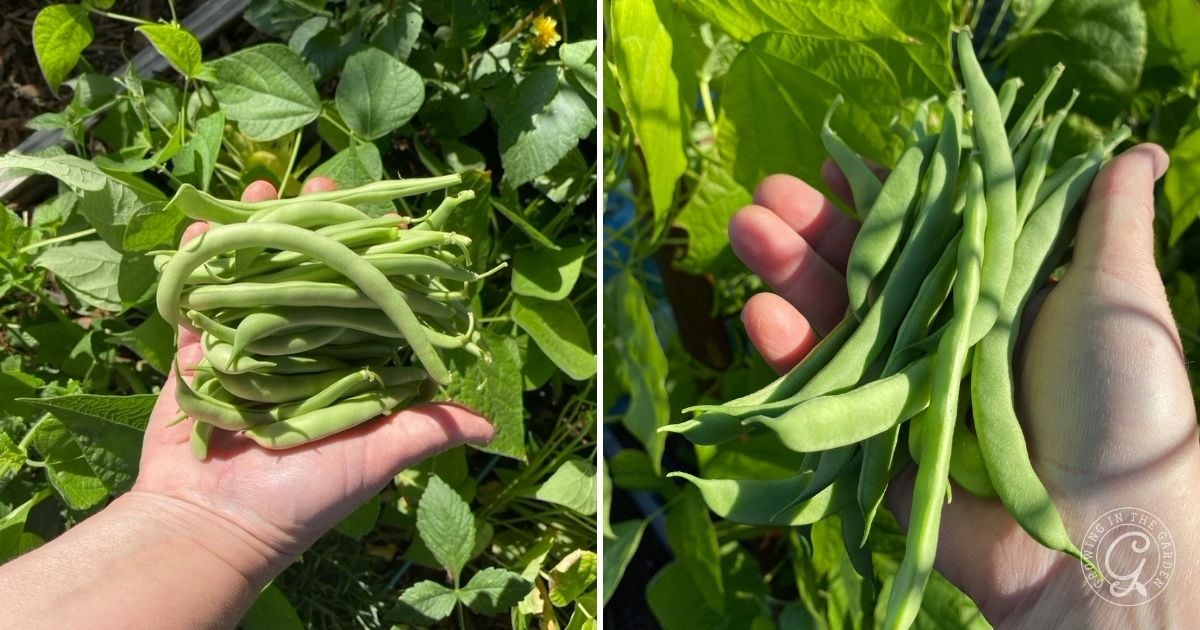
Pole beans are one of the first crops I’d recommend for vertical gardening. Once they find the trellis, they climb on their own and take up hardly any room in the bed. I plant them right next to the support and use the rest of the space for other crops. Compared to bush beans, pole beans usually produce longer and seem less fussy.
Use a tall trellis with fairly thin supports they can wrap around easily. If the soil is cold, bean seeds are more likely to rot. I plant them from about mid-March through April and again from August through September. The biggest mistake is waiting too long to harvest. Pick them young, before the pods start to bulge with seeds. If you want more help, read How to Grow Pole Beans. If you garden in containers or raised beds, Gardening in Grow Bags and Raised Bed Gardening are both helpful.
Best for: beginners, small-space gardens, and gardeners who want an easy true climber
Support: a tall trellis with thinner supports that they can wrap around easily
Watch for: cold soil at planting time, seedlings disappearing from rollie pollies, and pods left on too long
Cucumbers
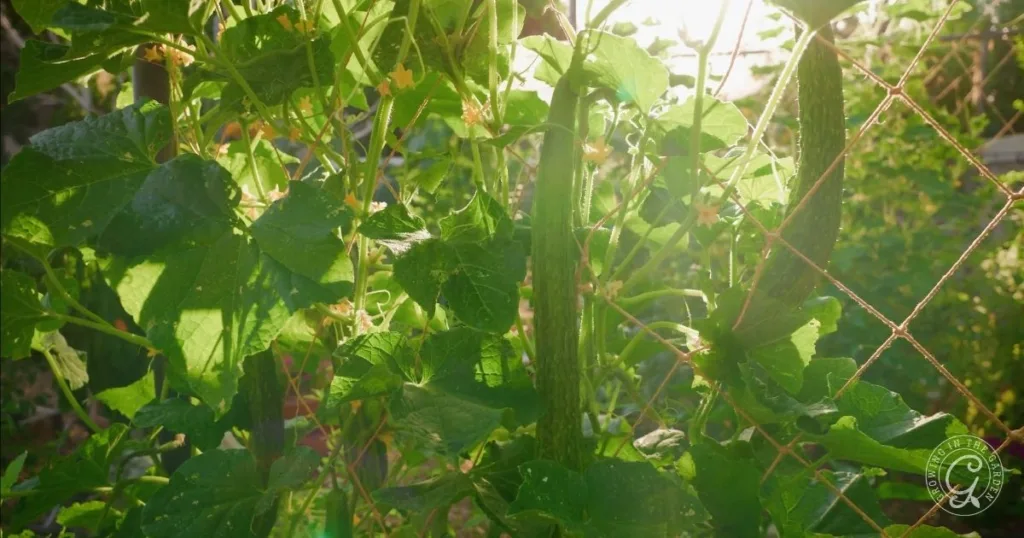
I only grow cucumbers vertically. When cucumbers grow up instead of sprawling across the bed, they’re easier to harvest, easier to manage, and much easier to check for problems.
They do need a little help early on. I usually guide them onto the trellis and keep an eye on the suckers. In the low desert, the hardest part is timing. Cucumbers like warm weather, not hot weather, so if spring ends quickly they can be frustrating. I plant them from about mid-February through April and again in late August and September. If your weather is heating up fast, Armenian cucumbers are often the better choice. Read How to Grow Cucumbers for more help. If pests or disease show up, Squash Bug Control and Powdery Mildew tips are worth reading too.
Best for: gardeners who want high production in a small space and don’t want vines sprawling across the bed
Support: a sturdy trellis you can guide vines onto early
Watch for: timing in hot climates, fast-growing suckers, squash bugs, and powdery mildew
Best Heat-Loving Crops for a Trellis
Armenian Cucumbers

If you garden in a hot climate, Armenian cucumbers are one of the best vegetables to grow on a trellis. They’re actually a melon, not a true cucumber, but they handle heat much better than regular cucumbers. They’re easier to grow, more consistent, and less bitter in my climate.
Growing vertically makes them easier to harvest, easier to keep in bounds, and the fruit usually grows straighter and cleaner on a trellis. I plant them from March through July, and they’re one of the few crops I can count on to produce well as temperatures rise. Harvest them young. That’s one of the biggest keys to good flavor. For more help, read How to Grow Armenian Cucumbers. Hot-climate gardeners will also find my guides on Desert Gardening and Summer Gardening helpful.
Best for: hot climates, long summer harvests, and gardeners who want an easier cucumber-type crop
Support: a wide, sturdy trellis with room for vines to spread
Watch for: fruit getting too large and larger seeds if you wait too long to harvest,Best vertical vegetables for beginners
Yardlong Beans

When regular beans are done or struggling in the heat, yardlong beans are one of the best vegetables for a vertical garden. They need a tall trellis. Make it as tall as you can. Once they take off, they really climb. In hot climates, they’re much more dependable than fussier green beans.
Yardlong beans help bridge that gap when other beans are finished and not much else is producing well. Harvest timing matters. If you wait too long, the pods get spongy, and the seeds start swelling inside. Young beans taste much better. They’re one of my favorite summer vertical crops, even though by the end of summer, I’m usually ready for the fresher flavor of traditional beans again. If you want planting and harvesting tips, read How to Grow Asparagus Beans. If rollie pollies go after your seedlings, read this guide for tips.
Best for: hot climates and gardeners who want beans when regular beans are slowing down
Support: the tallest trellis you can give them
Watch for: rollie pollies at the seedling stage and pods left too long until they turn spongy
Cantaloupe

Small melons like cantaloupe are a good fit for vertical gardening. I wouldn’t try to do this with watermelon, but cantaloupe works well. Growing them on a trellis makes it easier to see what’s growing, spot pests, and harvest on time. The fruit will usually support itself until it is ripe, so keep a close eye on the fruit and harvest it before it falls off.
I often thin to 2-3 fruit per vine so the plant can put more energy into sweeter melons, and when the vines are up on a trellis, it’s much easier to see what’s happening. This also helps because rollie pollies love going after cantaloupes on the ground. A ladder mesh block trellis works well, and for cantaloupe, slings are usually optional. I do think cantaloupe is easy enough for beginners in a warm climate. If you live somewhere with a short growing season, that may be different. Learn how to grow cantaloupe here.
Best for: warm climates and beginners who want to try something fun on a trellis
Support: a sturdy ladder mesh or tall trellis
Watch for: short growing seasons and harvest ripeness
Crops That Grow Better With Support
Tomatoes

Tomatoes aren’t true climbers, but they’re still one of the most important vegetables to grow vertically. They won’t grab onto a trellis by themselves. I use these clips to attach them, and you have to stay on top of it. If you don’t, branches droop, bend, and sometimes break. Fruit drops, plants sprawl, and everything becomes harder to manage.
The support I use depends on the type of tomato. For cherry tomatoes like Sungold and Juliet, I like wide trellises or cattle panels. For determinate tomatoes like Roma or Jolene, I like tall cages like these from Garden in Minutes. Tomatoes are absolutely worth growing vertically in a small space. Yes, you can let them sprawl, but they take up much more room that way, and fruit gets lost or dropped.
For more help, read How to Grow Tomatoes.
Best for: small-space gardens and gardeners who want to keep fruit visible and plants manageable
Support: cattle panels or wide trellises for cherry tomatoes, tall cages for determinate tomatoes
Watch for: branches drooping or breaking, fruit dropping, and plants sprawling if you don’t keep up with support
Tomatillos

Tomatillos aren’t natural climbers, but they become much easier to manage when you give them support. I think people often underestimate how big and unruly tomatillos get. In my experience, they can get several feet wide and tall, and without support, they quickly turn into a sprawling mess. Their branches are brittle, and support helps keep them from bending or breaking.
I like using my arch trellises for tomatillos, although they do take several feet of space in front of and underneath the arch. They can also be supported with a Florida weave setup using stakes and string. If space is limited, I wouldn’t prioritize them over other vertical crops. They take up a lot of room and can get out of hand quickly. Keep an eye out for pests like the three-lined cucumber beetle and diseases like powdery mildew. More than once, I’ve had large, loaded plants full of fruit that ended up dying from a virus. Read How to Grow Tomatillos for more help.
Best for: gardeners who have enough room and want to keep large plants more contained
Support: strong support is a must, such as arch trellises or a Florida weave setup
Watch for: how big and unruly plants get, brittle branches, pests, and virus problems
Fun or Useful, But Not My First Picks for Every Garden
Loofah

Loofah can do really well vertically, but only if you respect how large and vigorous the vine becomes. Whatever room you think you’ll need, triple it. One plant can cover a chain link fence or all three of my arch trellises if I let it. It loves the heat, climbs aggressively, and needs something tall and wide from the start.
That said, it’s surprisingly easy to grow. In that sense, I do think it can be beginner-friendly. The challenge is not getting it to grow. The challenge is keeping it in bounds and giving it long enough to ripen fully. In the low desert, loofah can take so long that some fruit still isn’t ready before I’m ready to switch over to cool-season planting. That’s one reason I like growing it in a whiskey barrel on one tall trellis. If space is limited, this is one I’d skip. For more help, read How to Grow Loofah.
Best for: gardeners with plenty of room who want a vigorous heat-loving climber
Support: a tall, wide, very sturdy trellis from the start
Watch for: how fast it takes over, how long it takes to mature, and whether you really want to give it that much space
Malabar Spinach

Malabar spinach is one of those crops that sounds better in theory than it always is in practice, but it still deserves a spot on this list. It’s a true climbing vine. When most leafy greens are long gone, Malabar spinach is on the short list of things that will actually grow.
Don’t expect it to taste like spinach. It doesn’t. The texture can be slimy, and I only recommend it if you think you’ll actually use it. If you’re an adventurous eater and want to try something different, it’s worth growing. If you’re hoping for a heat-tolerant spinach replacement that tastes like spinach, skip it. It grows best for me in a shadier spot, and I grow it more because it survives the heat than because I love eating it. For more on growing it, read How to Grow Malabar Spinach. For more crops that thrive in the heat, read this guide.
Best for: adventurous eaters and hot-climate gardeners looking for a summer edible vine
Support: almost any trellis, including ladder mesh, block trellises, or cattle panels
Watch for: slimy texture, reseeding, and disappointment if you expect it to taste like spinach
Best vertical vegetables for beginners
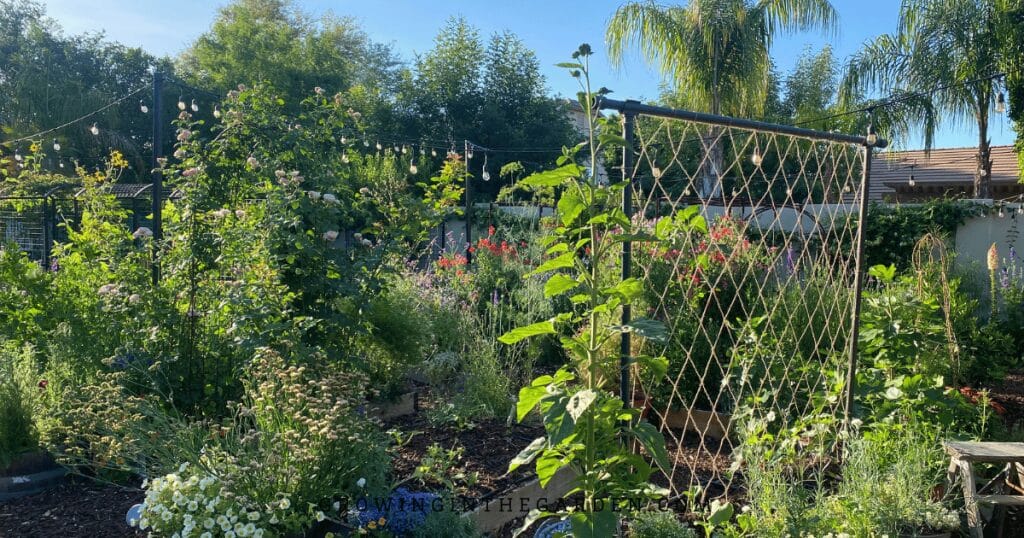
If you’re just getting started, I’d begin with pole beans, peas, and Armenian cucumbers.
Pole beans are easy from seed and make great use of vertical space. Peas are one of the most rewarding cool-season crops you can grow on a trellis. Armenian cucumbers are one of the best hot-climate choices because they’re productive, heat-tolerant, and easier than regular cucumbers in many warm areas.
If you want one cool-season crop, choose peas. If you want one warm-season crop, choose Armenian cucumbers. Read my beginner gardening guide here.
If I only had room for 3, I’d grow these:

If I only had room for three, I’d grow pole beans, peas, and Armenian cucumbers.
That gives me one of my favorite cool-season crops, one of the easiest climbers, and one of the best summer producers in hot climates.
Best Crops for Vertical Gardening FAQs
The best vegetables for vertical gardening are crops that either climb on their own or benefit from support. Good choices include pole beans, peas, cucumbers, Armenian cucumbers, yardlong beans, tomatoes, and small melons like cantaloupe.
Pole beans, peas, cucumbers, Armenian cucumbers, yardlong beans, Malabar spinach, and loofah will climb once they find a trellis. Some may need a little help getting started, but they usually take off on their own after that.
Pole beans, peas, and Armenian cucumbers are some of the easiest vegetables to grow vertically. Pole beans and peas are easy true climbers, and Armenian cucumbers are a great choice for hot climates because they’re productive and easier to grow than regular cucumbers.
Armenian cucumbers, yardlong beans, and small melons are some of the best choices for hot climates. Malabar spinach can also work, but I’d only grow it if you think you’ll actually use it.
Final thoughts
Vertical gardening is one of the easiest ways to grow more food in less space.
Start with the crops you like to eat, choose the right type of support, and you’ll be successful. A simple trellis and the right crop make gardening fun and easy.



May I have some advice on Armenian cucumbers. I have never been able to successfully grow them, and I live inn zone 9 !
I would look for the Painted Serpent variety, it’s very good. Try to plant from seed in rich soil. Make sure it gets enough sunlight.
Love this site and started a garden after I found you. One question – I have a couple of Cherry Falls tomatoes in my garden and they are SO bushy that the little tomato cages I have around them aren’t doing them any good. How can I keep them off the ground? Should I grow them in hanging containers next time?
I hadn’t heard of that variety, it looks like a fun one to grow. Yes you may want to put it in some sort of a container that it can cascade down over. Hanging baskets can be difficult to grow in hot, dry climates.
What a great idea! I have a grape arbor but have given up on the grapes due to the constant leaf spot. Only thing is it does not get full sun, only half. Is there a vining vegetable that would do okay with that – even if it meant getting less of a harvest? Thank you!
Malabar spinach does better with less sun. That could work there.
Fantastic
I planted patio cucumbers last year in a half barrel container on our east patio. The plant grew like crazy and had a lot of blossoms. Unfortunately the blossoms never produced cucumbers. Any idea why?
They may not have been pollinated. Keep an eye out for the female flowers (they look like small cucumbers) and pollinate them with a male flower (flower on thin stem, not bulbous). I usually remove the male flower and gently pass the pollen onto the female flower if I’m finding fruits aren’t developing.
Thanks so much for all of your awesome info here! I have an approx. 4 foot trellis that I would love to use in my garden. is this too short for malibar spinach? or would it be better off used for something else?
You’re welcome. Four foot is fine, you may need to keep it trimmed or cut back a little, but it should cover the trellis fine and give you plenty to harvest.